The prompt that started it all
It all started with this, written as-is, unedited:
“Lo que mi cerebro no puede expresar/explicar a través de mi, la IA me ayuda a contextualizar y luego expresarlo, comunicarlo. Analicemos este pensamiento que es lo que estoy experimentando trabajando con la IA, es potencilizando mis capacidades, es un esteroide para mi intelecto, analicemos”
Translation: “What my brain can’t express/explain through me, AI helps me contextualize and then express it, communicate it. Let’s analyze this thought which is what I’m experiencing working with AI, it’s potencilizing my capabilities, it’s a steroid for my intellect, let’s analyze”
Two sentences. Imperfect punctuation, with errors. No formal structure. And yet, there’s more substance in there than in many well-formatted documents I’ve read throughout my career.
That in itself says something important.
The lifelong problem: too much inside, too little outside
I’ve spent over three decades working in technology. I’ve designed infrastructures, managed teams, made decisions that affected entire organizations. And yet, for most of that time, I lived with a constant frustration that few understood: I knew exactly what I was thinking, but articulating it for others was an entirely different problem.
When I was younger, I preferred not to speak. Not out of shyness, but because when I did, people didn’t understand me. I spoke too technically, too compressed, assuming the other person had the same mental map as me. They didn’t. Over time I learned to communicate better, but the limitations never fully disappeared.
The bottleneck wasn’t my ability to think. It was my ability to externalize what I thought.
Popeye’s spinach
When I started working with AI seriously, something changed. I could take a raw thought, transmit it as-is, with errors, without structure, and receive it back organized, linear, clear. And when I read it, I internalized it in seconds.
Why so fast? Because I wasn’t learning anything new. I was recognizing something of mine. The content already existed inside me. AI just gave it shape. And recognition is cognitively more efficient than acquiring new knowledge, always.
Drafting a difficult email, documenting an important meeting, structuring a complex technical analysis — things that used to cost me disproportionate time and energy relative to the knowledge I already had — now flow. Not because AI thinks for me, but because it acts as the output channel I always lacked.
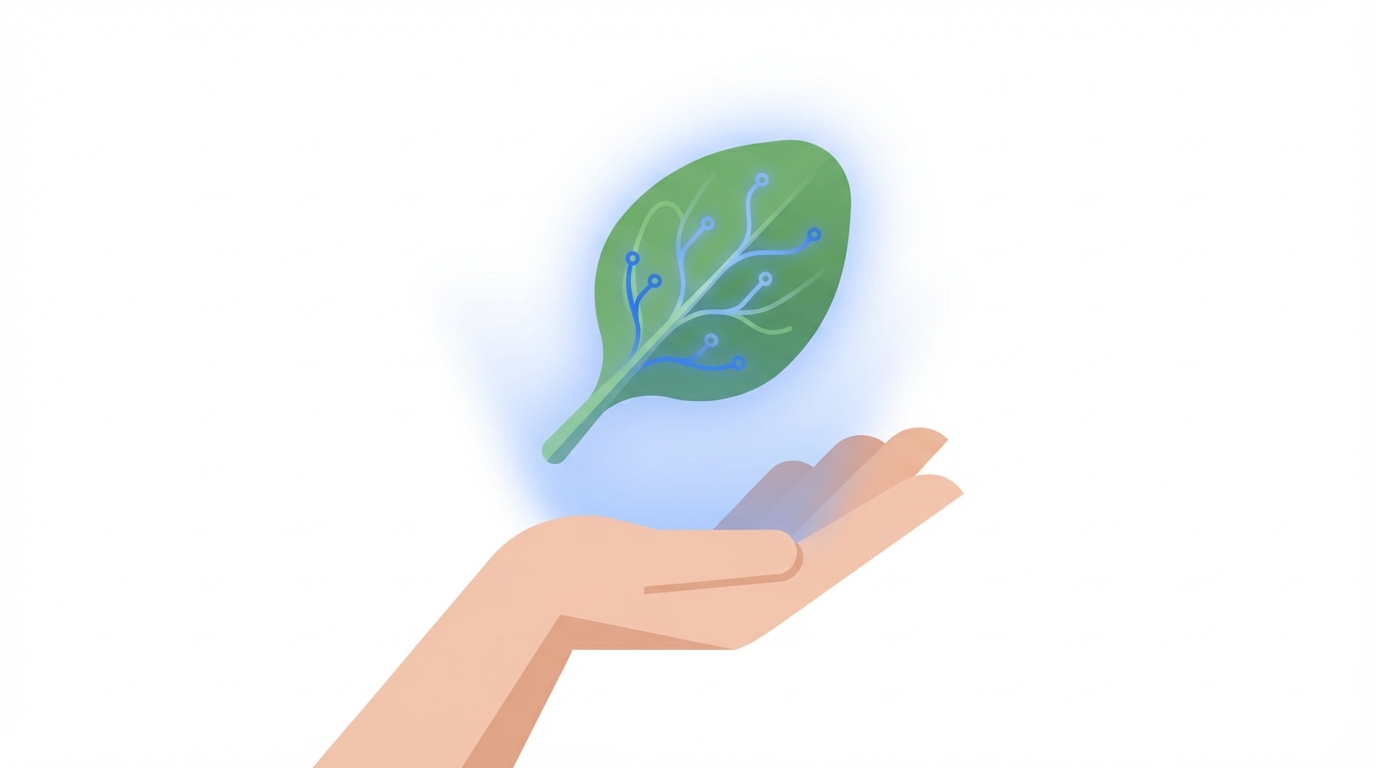
The metaphor that best describes it: “Popeye’s spinach”. Popeye already knew how to fight. The spinach didn’t create him or train him. It unlocked him. That’s exactly what I feel. These aren’t new superpowers. It’s that for the first time, the outside world sees what was always inside.
A warning I can’t omit
What I describe works because there are 33 years of experience behind the prompt. AI amplifies what exists. If there’s no foundation, there’s nothing to amplify — just text that sounds good but is empty.
For those with experience: the risk is becoming comfortable. Use it to communicate better, not to stop communicating on your own.
For those just starting out: this is the most serious risk. AI can give you expression without the knowledge that should sustain it. You can sound competent before you are. Use it to learn faster, not to skip the learning.
Are you using AI to better express what you think, or are you starting to think based on what AI can express? That difference determines everything.
I’m writing this because I know I’m not the only one
There are people who their whole lives have had more inside than they could communicate, who thought differently from how the world expected them to think, who felt that frustration of knowing and not being able to transmit it.
If that’s you, and you’ve started working with AI seriously, you’re probably already feeling something similar to what I describe. Don’t dismiss it as tech enthusiasm. It’s real. And there’s an explanation for it.
Just remember: the spinach works because Popeye already existed.
by: Cesar Rosa Polanco — Written from a real experience, with AI’s help to give it shape.