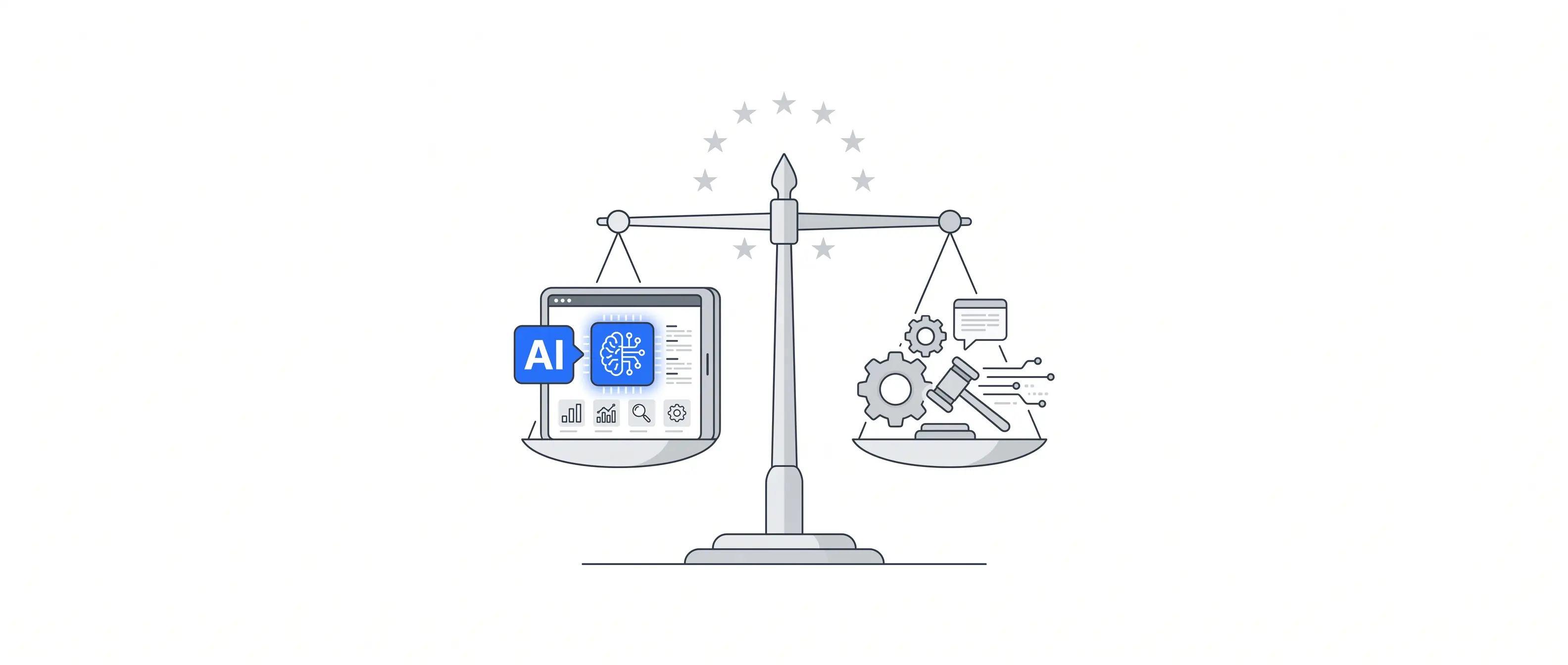
The most important question in Magnifica Humanitas is not whether artificial intelligence works. Nor whether it will be faster, more useful, or more powerful. The question is simpler and more uncomfortable: whether this technology helps us become more human, or whether, little by little, it gets us used to living with less judgment, fewer real bonds, and less responsibility.
That is why, if I had to keep one word from the encyclical, it would be this one: disarm. Leo XIV speaks of disarming AI: taking away its dominion over what is human, removing it from the control of a few, and making it open to discussion, correction, and human habitation. But he does not stop there. He also asks us to disarm words and speaks of a disarmed and disarming peace. So disarmament is not only something we must demand of technology. It also concerns us (§110, §214, §228).
On May 25, the Holy See published Magnifica Humanitas (Magnificent Humanity), an encyclical letter of the Holy Father Leo XIV on “safeguarding the human person in the age of artificial intelligence.” The document was signed in Rome on May 15, 2026, the 135th anniversary of Rerum novarum (Of New Things). The date helps frame the document: just as Leo XIII read the labor question of the first industrial revolution in the light of the Gospel, Leo XIV reads the digital revolution from the Social Doctrine of the Church (§3-4).
I write this walkthrough as a Christian and as someone who works with these tools every day. Not as a theologian, and not as a specialist in social magisterium, but to share what I read, what I understood, and what it leaves me with. The deeper question is simple: what are we building? Babel or Jerusalem? A shining tower that ends up sacrificing what is human, or a city rebuilt through shared responsibility, where every person keeps their dignity?
The question: Babel or Jerusalem
The encyclical opens with two biblical accounts. The first is the Tower of Babel: a work built “without reference to God,” sustained by one language, one direction, and a uniformity that eliminates diversity. The promise was greatness; the result was dispersion (§7).
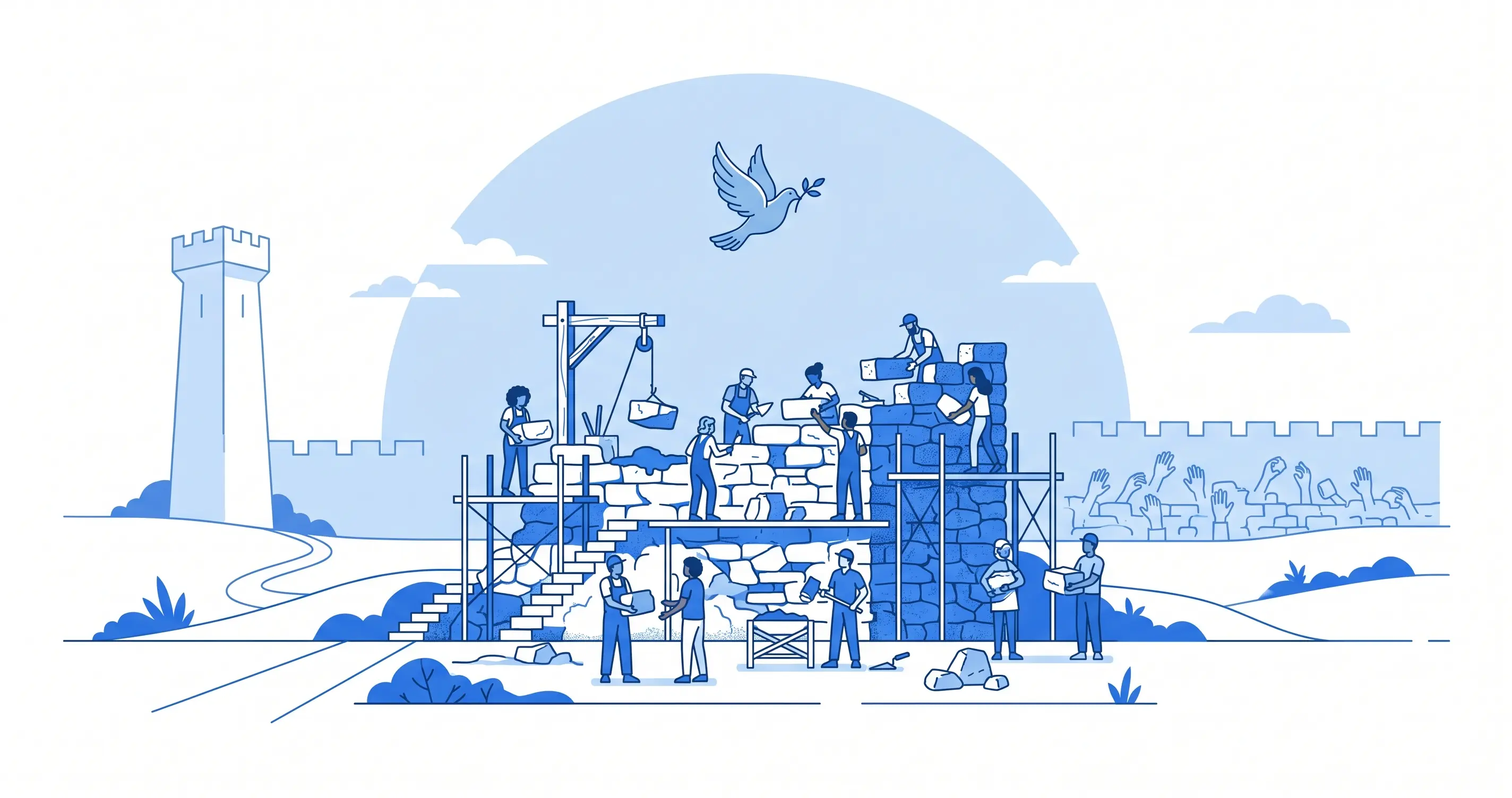
The second account is the rebuilding of Jerusalem with Nehemiah. There is no solution imposed from above. There is prayer, listening, coordination, and shared responsibility. Each family receives a stretch of wall. The city is reborn because bonds are rebuilt before stones (§8).
From these images, Leo XIV presents the central choice: the first decision is not simply to say “yes” or “no” to technology, but to choose between building Babel and rebuilding Jerusalem. Technology can heal, connect, educate, and care for our common home; it can also divide, discard, and generate new injustices. In the abstract, it is not evil. But in real life, it is not neutral: it takes on the face of whoever conceives it, finances it, regulates it, and uses it (§9).
For me, that is one of the most important points in the document. AI should not be judged only by what it can produce. We also have to look at the kind of world it helps build and the kind of relationships it strengthens or weakens.
A tradition for looking at technology
The first two chapters are not a detour. They are the ground from which the document looks at the digital revolution. The Social Doctrine of the Church appears as a living tradition, not as a frozen list of answers. It is born from the Gospel, it dialogues with history and the sciences, and it offers principles for discernment: the dignity of the person, the common good, the universal destination of goods, subsidiarity, solidarity, and social justice (§17-89).
This matters because AI does not appear as an isolated topic or as a trend added at the end. The encyclical says that the digital revolution touches the categories of Social Doctrine from within and requires them to develop. The decisive question is not only whether a tool works, but whether it helps persons and peoples grow in humanity and fraternity, while respecting our common home and future generations (§17, §85).
In that framework, AI stops being only a technical issue. It becomes a social, political, economic, educational, and spiritual question. Not because every answer has to come from the Church, but because every technology that touches human life must be read from the dignity of the person and the common good.
What AI is and what it cannot be
Leo XIV makes clear that he does not intend to offer a technical treatise on artificial intelligence (§97). Even so, he marks out two important warnings.
The first has to do with how quickly this field changes. Any statement about AI can become outdated in a short time, and not even those who design these systems fully understand their internal operation. Modern artificial intelligences are more “cultivated” than “built”: an architecture is created and the system grows on top of it, without every internal process becoming fully transparent (§98).
The second warning has to do with what is human. We should not confuse this “intelligence” with human intelligence. AI systems imitate functions of human intelligence and often surpass us in speed or calculation, but they do not live an experience, they have no body, they do not know joy or pain, they do not mature through relationships, and they possess no moral conscience. They can simulate empathy or understanding, but they do not know what they produce (§99).
In personal use, the encyclical identifies three risks: the ease of obtaining results, which can weaken one’s own judgment; the impression of objectivity, which can hide the cultural parameters of those who design and train the systems; and the simulation of human communication. The most delicate warning is in this last point: the danger is not only believing that one is speaking with a person, but losing the desire to genuinely seek out the other (§100).
Here the document touches a sensitive nerve. The risk is not only that AI deceives us. The risk is that we get used to a relationship that is too comfortable: one where the other does not interrupt, does not contradict, does not require patience, and does not ask for care.
Disarming AI
One of the strongest words in the encyclical is “disarm.” It does not appear as a pretty phrase. It is a key for looking at technology, power, and also the way we use these tools.
Disarming AI does not mean rejecting it. Leo XIV says this clearly: it is not a matter of renouncing technology, but of preventing it from dominating what is human. To disarm it is to remove it from the logic of the race - military, economic, and cognitive - where technological power begins to be confused with the right to govern. It is to take it out of the control of a few, make it open to discussion and correction, and remember that technology must serve many cultures and ways of life, not impose only one (§110).
This is one of the document’s most important insights. AI is not only a tool we use; it is becoming an environment in which we live. That is why it is not enough to ask whether it answers well. We have to ask who designs it, with what data, under what interests, with what possibility of correction, and with what consequences for those who do not have the power to audit it (§95, §105-108).
There the Social Doctrine stops being a list of principles and becomes something very concrete. The common good matters when power concentrates in a few hands. The universal destination of goods matters when data, which is the contribution of many, ends up under the control of a few. Subsidiarity, that is, decisions being made as close as possible to the people they affect, matters when things are decided from above and no one can question them. Solidarity matters when there is invisible human labor behind the models. And social justice matters when we build it in from the design stage, and not as a last-minute fix.
The appeal to those who develop AI systems is direct: every design decision expresses a vision of humanity (§111). There are no neutral decisions when opportunities, reputations, rights, work, education, or security depend on them. What a system measures, ignores, optimizes, or classifies already contains an idea of the person and of society (§104).
That is why “disarming” is more demanding than “regulating.” Regulation can remain at the level of external limits. Disarming means taking away technology’s claim to dominion and returning it to its proper place: serving the person, not replacing the person; expanding responsibility, not diluting it; opening possibilities, not closing the future into the hands of a few.
What we cannot lose
The encyclical devotes a section to what we must not lose. Against a culture that looks at incapacity, illness, old age, error, and vulnerability as defects to be corrected, it reminds us that the human being does not flourish despite limits, but often through them (§118).
In the experience of limits, compassion, sincere concern for others, generosity, spiritual experience, and worship all find their place (§119). That statement goes against the current. In an age obsessed with optimizing everything, Leo XIV reminds us that not every limit is failure and not every fragility should be eliminated.
The critique of transhumanism and posthumanism is not a general condemnation of technology. The point is the vision that guides it. If the person is understood as material to be perfected or surpassed, it becomes easier to accept that some people may be considered less useful, less desirable, or less worthy. In the name of progress, there can even be talk of “necessary sacrifices,” making the most vulnerable pay the price of a presumed optimization of the species (§117).
The true “more than human,” for the encyclical, is not found in escaping the body or overcoming the human condition as if it were an error. It is found in grace, in communion, in the capacity to love, to receive the other, and to live our own greatness without denying dependence, wound, and limit (§120-130).
Truth, work, and freedom
The fourth chapter applies this discernment to three concrete areas: truth, work, and freedom (§131).
On truth, the document recalls that disinformation does not begin with AI, but it finds in AI a powerful multiplier. The manipulation of content, images, and videos weakens public trust and makes the line between true and false more blurry (§132). The response cannot be to hand truth over completely to automatic systems. The truth of facts requires verification, comparison of sources, responsible speech, and bonds of trust.
That is why education appears as a decisive task. The encyclical identifies three challenges: unequal access, curricula that quickly become obsolete in the face of AI, and the risk of an educational system “lacking love for the truth.” From there comes its proposal for a hygiene of attention: silence, reflective study, reading, careful analysis, and time to form critical thought (§144-147).
On work, the diagnosis is serious. Automation can free people from heavy, repetitive, or dangerous tasks, but it cannot justify an economy that sacrifices employment again and again in order to increase profits. In some contexts, it is realistic to fear a significant and rapid reduction in jobs, with effects on families, young people, and local economies (§151). The general rule must remain the protection of employment and of the irreplaceable role of the person, because the human person is an end and not a means (§152).
On freedom, the text does not remain at an abstract idea of autonomy. It speaks of dependencies, social control, turning persons and data into merchandise, and new forms of slavery. On the environmental level, it warns that current AI systems require large amounts of energy and water, produce emissions, and depend on data centers and intensive infrastructure (§101). On the labor and social level, it recalls that “in the world of AI nothing is immaterial or magical”: behind every answer there are natural resources, energy infrastructures, and concrete persons, from those who label data to those who moderate content and train models (§173).
That passage is one of the harshest in the encyclical. It denounces the poorly paid labor that sustains part of the digital economy, the extraction of resources for devices and microprocessors, and the dangerous conditions in which adolescents and children work with materials linked to rare earths (§173). The promise that technology liberates us is badly damaged if, underneath, it depends on chains of exploitation that almost no one sees.
Leo XIV also recognizes the historical delay with which the Church condemned slavery in absolute terms and sincerely asks forgiveness in the name of the Church (§176). That memory is not a footnote to the past. It becomes a demand for the present: it is not enough to deplore old chains if we tolerate new ones, cleaner in appearance, harder to see, but equally contrary to human dignity (§177).
Disarming words
The fifth chapter brings discernment into the realm of war. The digital revolution is changing the way conflicts are fought: visible war is now joined by cyberattacks, manipulation of information, influence campaigns, and automated decisions in war contexts (§183).
Faced with autonomous weapons, the encyclical is blunt. Moral judgment cannot be reduced to calculation: it involves conscience, personal responsibility, and recognition of the other as a person. That is why it is not licit to entrust lethal or irreversible decisions to artificial systems. “No algorithm can make war morally acceptable” (§198).
As an alternative, the document proposes the civilization of love. It does not present it as a spectacular gesture, but as small decisions sustained every day. It proposes five paths of daily and public responsibility: disarming words, building peace in justice, taking on the gaze of victims, cultivating a healthy realism, and relaunching dialogue and multilateralism (§213).
The first path is to care for language: “Let us disarm words and we will help to disarm the earth” (§214). There the end of the document connects with its center. It is not enough to disarm systems. We also have to lower the weapons in public conversation, in the way we look at the adversary, and in the ease with which we turn the other into a threat, data, enemy, or noise.
Language is not a moral decoration. It prepares the ground for coexistence or for violence. That is why a more human civilization also begins with less armed words: less humiliation, less caricature, less contempt; more truth, more listening, more justice, and more capacity to recognize the face of the other.
The question that remains
The conclusion returns to the theological center of the document: the Incarnation, the Eucharist, and the Magnificat as a song of hope. From there, the encyclical offers four concrete indications for this time: remaining faithful to the truth, investing in an education that begins with oneself, caring for relationships, and loving justice and peace (§236-240).
That is why I return to the word that stayed with me from the document: disarm. The encyclical invites us to disarm AI, to take away its dominion over what is human, remove it from the control of a few, and make it open to discussion and correction. But Leo XIV does not stop there. He also asks us to disarm words and speaks of a disarmed and disarming peace (§110, §214, §228). And that, for me, is the most important turn: disarmament is not only a task for governments, companies, or developers. It also touches us, in the way we look at the other, the way we speak, and the way we use these tools.
That is the question Magnifica Humanitas leaves behind. Faced with any technology, it is not enough to ask whether it works, nor even whether it makes us more efficient. The Christian, and also deeply human, question is another one: does it make us more capable of truth, justice, relationship, care, and peace? Does it make us more human or less?
By: Cesar Rosa Polanco - Written from a real experience, with artificial intelligence used as an editorial support tool.