After spending more than 6 hours fixing a broken OpenClaw update - a story I documented in I Updated OpenClaw and Everything Broke - I built the right procedure to make sure it doesn’t happen again. Since then, I’ve tested it across multiple updates, including a jump from v2026.3.31 to v2026.4.2 that took 15 minutes without a single error.
This procedure is built for OpenClaw running on a Linux VPS with systemd. I put it together by combining real-world pain with the flow the official docs recommend today: update, run openclaw doctor, restart the gateway, and verify before you trust production again.
Before You Begin
You need to be clear on three things:
- How OpenClaw is installed: official installer, global npm, global pnpm, or a repo checkout. The update path depends on that.
- How your gateway runs: manual foreground process, systemd user service, or system service. You need to know how to restart it and which user owns it.
- Where your state lives: at minimum
~/.openclaw/openclaw.json,~/.openclaw/credentials/,~/.openclaw/agents/,~/.openclaw/workspace, and, if you use it,~/.openclaw/.env.
The Procedure
Step 1: Make a Real Backup
Before touching anything, create a full OpenClaw backup. The cleanest way today is the built-in command:
openclaw backup create --verifyIf you also rely on environment variables outside OpenClaw’s normal state, back those up too:
[ -f ~/.openclaw/.env ] && cp ~/.openclaw/.env ~/.openclaw/.env.backup-$(date +%Y%m%d-%H%M%S)That backup gives you an orderly escape hatch if something goes sideways. Don’t wing this step.
Step 2: Document the Current Version
Before updating, record the version you’re running now:
openclaw --versionI also recommend capturing a quick state snapshot:
openclaw status
openclaw gateway status
If you need to roll back, that baseline will save you a lot of confusion.
Step 3: Read the Changelog and Docs Before Running Anything
Read the official updating guide and keep the troubleshooting page open. Look specifically for:
- breaking changes between your current version and the target version
- changes to
auth-profiles.jsonor credential resolution - changes to service behavior or restart flow
- changes to discovery, bind, auth, and gateway guardrails
- new dependencies or runtime requirements
If you’re skipping multiple versions, review the intermediate ones too. A breaking change in the middle still applies to you.
Step 4: Choose the Correct Update Method
Don’t mix update methods. Use the one that matches your install:
# Official installer (recommended path)
curl -fsSL https://openclaw.ai/install.sh | bash

# Global install with npm
npm i -g openclaw@latest

# Global install with pnpm
pnpm add -g openclaw@latest

# Repo checkout
openclaw update
If you’re on a repo checkout or you want to preview what OpenClaw will do before changing anything, start here:
openclaw update --dry-runStep 5: Run openclaw doctor
This is the step that has saved me the most pain. Start with a normal diagnostic pass:
openclaw doctorIf it proposes a concrete repair and you understand the change, then run:
openclaw doctor --fixRun it as the same user that owns the gateway. If your service runs under a specific account, don’t run this as root “just in case.” openclaw doctor can migrate config, detect legacy services, and warn you about conflicts that won’t be obvious from systemd alone.
Step 6: Make Sure You Don’t Have Two Services Fighting Each Other
Start with the official service view:
openclaw gateway status
openclaw gateway status --deep
On Linux, also validate the systemd layer you actually use:
# If you use a systemd user service
systemctl --user status openclaw-gateway.service

# If you maintain a custom system service
systemctl status openclaw-gateway.service
The rule is simple: there should be one clear supervision path, not two. If you have one legacy service and another created by the current OpenClaw flow, fix that before moving on.
Step 7: Verify Auth and Models Before the Final Restart
Don’t wait to discover credential problems after the agent has already gone silent. Check auth and models explicitly:
openclaw models statusIf you want a live provider validation, you can run an active probe:
openclaw models status --probeIf you see missing auth here, immediately check your per-agent auth profiles in ~/.openclaw/agents/<agentId>/agent/auth-profiles.json, your credentials under ~/.openclaw/credentials/, and any environment-variable source your deployment still depends on.
Step 8: Restart the Gateway the Right Way
If you’re already using the managed OpenClaw service, don’t kill processes by hand. Restart from the CLI:
openclaw gateway restart
openclaw gateway status
openclaw status
If openclaw gateway status doesn’t show Runtime: running and RPC probe: ok, you’re not done yet.
Step 9: Verify Real Functionality, Not Just “active (running)”
An update isn’t finished because systemd says the process exists. It’s finished when OpenClaw actually responds.
Validate all of this:
- send a message through your primary channel
- confirm the agent replies
- review channel status
- confirm sessions, cron jobs, and automations are still alive
Useful commands:
openclaw channels status --probe
openclaw status --deep
Step 10: Watch the Logs for at Least 5 Minutes
Don’t close the session the moment you see “running.” Stay and watch:
openclaw logs --followThis is where delayed failures show up: modules that crash after 30 seconds, port conflicts, degraded auth, channels that connect but don’t deliver, or a duplicate process killing the real one.
Step 11: If Something Breaks, Use the Official Ladder
When OpenClaw breaks, don’t improvise. Run the triage sequence in this order:
openclaw status
openclaw status --all
openclaw gateway probe
openclaw gateway status
openclaw doctor
openclaw channels status --probe
openclaw logs --follow
That ladder tells you quickly whether the problem is reachability, auth, the service layer, channels, or config.
Step 12: Have Rollback Ready Before You Need It
If something doesn’t line up and you don’t have a clear fix within minutes, go back.
For global installs:
npm i -g openclaw@<version>
# or
pnpm add -g openclaw@<version>

openclaw doctor
openclaw gateway restart
For repo checkouts:
git fetch origin
git checkout <known-good-commit-or-tag>
pnpm install
pnpm build
openclaw gateway restart
The purpose of rollback isn’t to give up. It’s to get back to a healthy state so you can investigate with a clear head.
What to Do If Something Fails
OpenClaw won’t start
- Check
openclaw gateway status - Run
openclaw doctor - Follow
openclaw logs --follow - If the problem started right after the update, compare current config against your backup and the changelog
OpenClaw starts and dies in a loop
- Look for port conflicts or duplicate services with
openclaw gateway status --deep - Check whether discovery or bind behavior changed between versions
- Verify whether the gateway ended up with stricter auth or safety guardrails
- Don’t keep spraying random commands at it; go back to the ladder in Step 11
Models don’t respond or auth is missing
- Run
openclaw models status - Check
auth-profiles.jsonin the correctagentDir - Confirm that your keys or tokens are actually loading into the current runtime
- If you’re relying on legacy compatibility, verify it didn’t get halfway broken during the update
Nothing works
- Stop the experiment
- Restore the backup
- Go back to the last stable version for your setup
- Re-read the changelog and docs before trying again
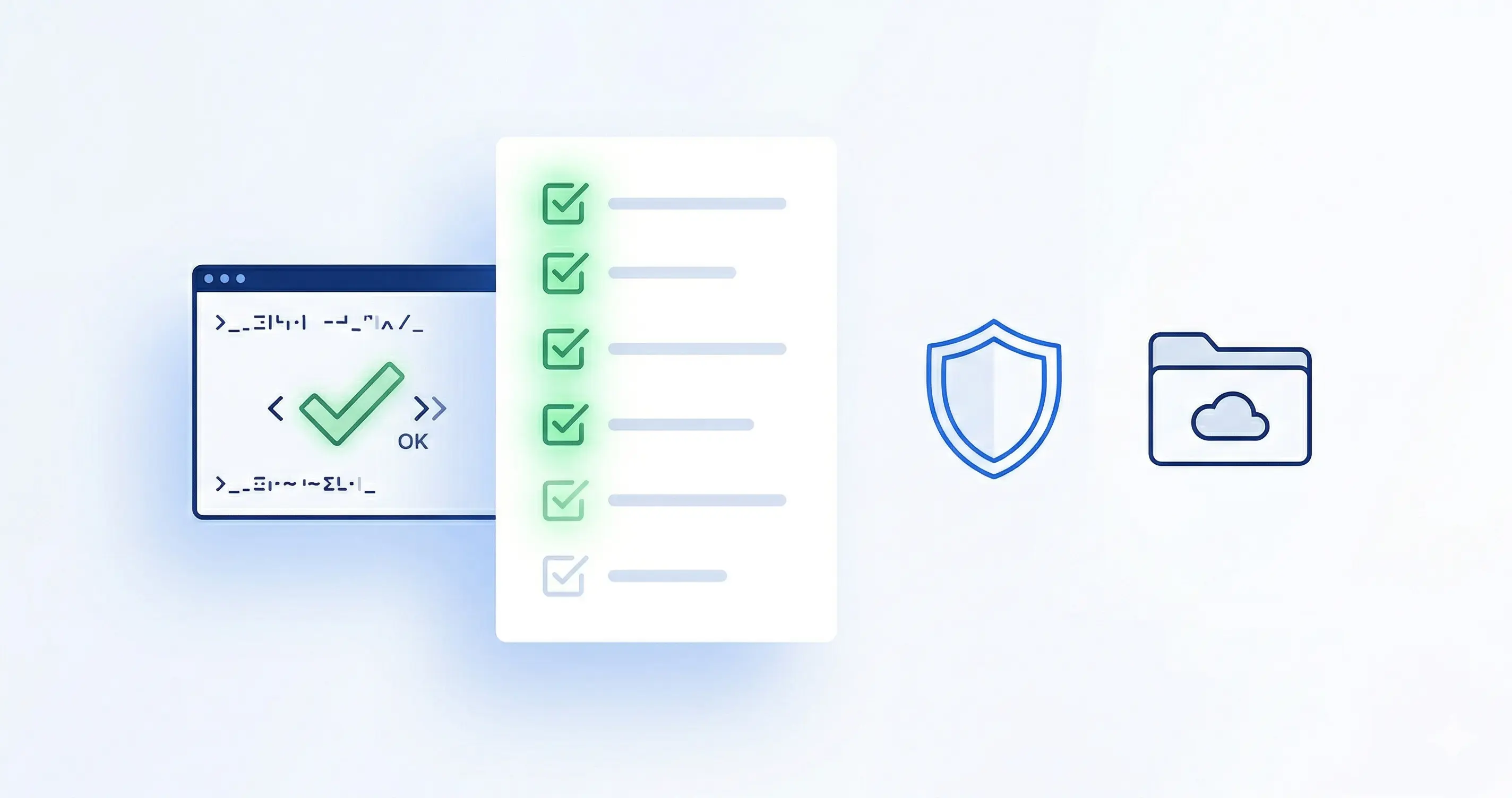
Quick Checklist
Before updating:
- Backup created with
openclaw backup create --verify -
.envbacked up if applicable - Current version documented
- Current state captured with
openclaw statusandopenclaw gateway status - Changelog and docs reviewed
- Correct update method identified
After updating:
- Binary updated and version confirmed
-
openclaw doctorrun - Duplicate services ruled out
- Auth and models verified with
openclaw models status - Gateway restarted with
openclaw gateway restart -
openclaw gateway statusshows a healthy gateway - Primary channel tested
-
openclaw channels status --probelooks clean - Logs watched for at least 5 minutes
- Rollback plan ready if anything degrades
Final Reflection
A software update should take 15 minutes, not 6 hours. The difference between a smooth update and a disaster is having a documented procedure and following it. It doesn’t matter how much experience you have or how good your AI tool seems to be: without a clear process, every update is a gamble.
Document your procedure. Always back up. And if something goes wrong, don’t panic: restore, read, and try again calmly.
By: Cesar Rosa Polanco - Based on a real case, with editorial support from artificial intelligence.