This article closes a series of three. The first proposed that your chat history contains evidence of your own reasoning; the second documented the method to extract it. During that research, a paper surfaced that flips the question around. The series examines what an agent can learn from us; three MIT researchers ask what we stop learning when we delegate to AI. Their answer is a warning worth taking seriously.
The model: general knowledge, context and incentives
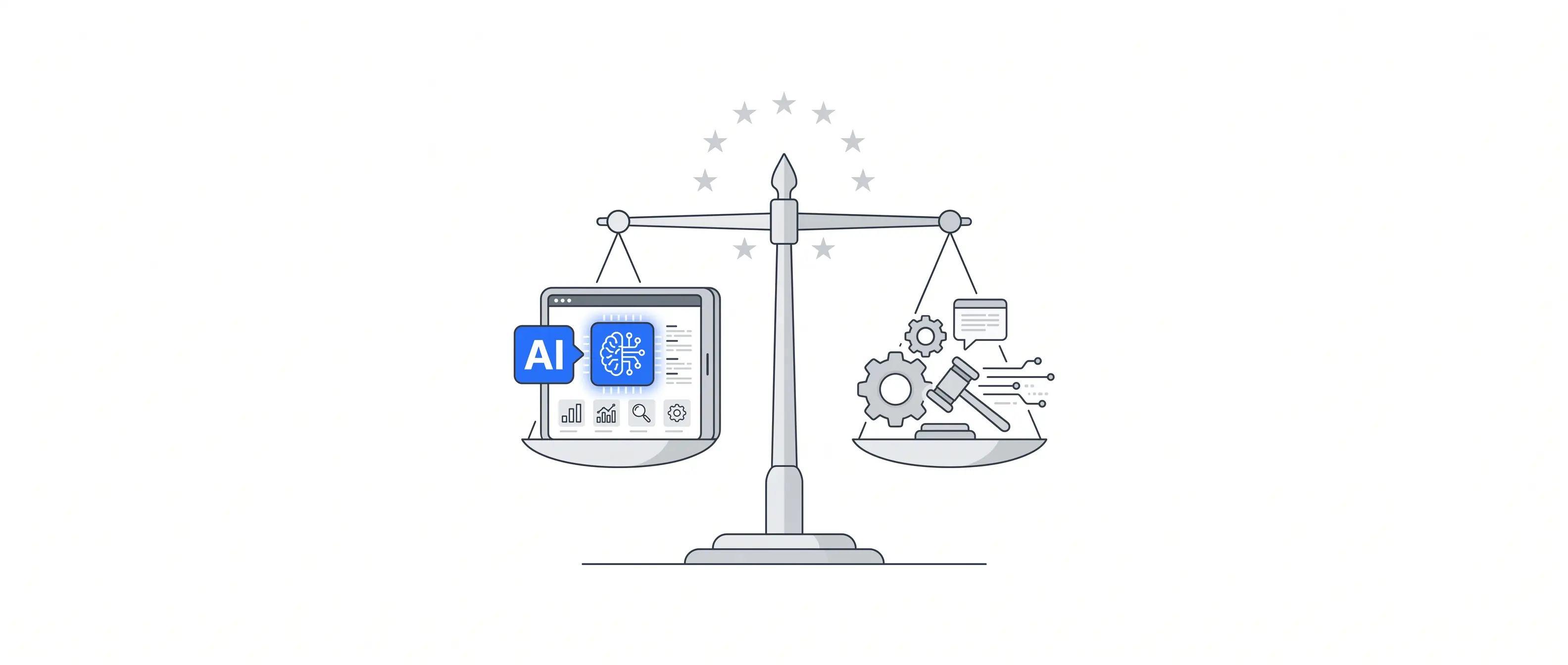
In February 2026, Daron Acemoglu, a co-recipient of the 2024 Nobel Prize in Economic Sciences, published AI, Human Cognition and Knowledge Collapse (NBER 34910) with Dingwen Kong and Asuman Ozdaglar. The paper was updated in May 2026. It is a theoretical working paper that has not yet been peer-reviewed. It does not predict that collapse will occur; it identifies the conditions under which it could emerge.
Here, “agentic AI” is used in the model’s specific sense: systems that provide personalized, context-dependent information or recommendations. The paper formalizes something many of us sensed without being able to name: this kind of AI can improve individual decisions today while eroding tomorrow’s collective knowledge.
The model distinguishes two kinds of knowledge. General knowledge belongs to the community: how diseases work, how financial instruments behave or how network protocols function. Context-specific knowledge depends on you and your situation: this patient’s symptoms, this investment’s risk, this server’s bug. The key premise is that the two are complements: context without a general foundation is worth nothing. A doctor who sees the symptoms but does not understand the disease cannot treat the patient.
The second pillar is subtler. When a person puts effort into learning, they produce two things at once: they understand their own problem, and they generate a small piece of general knowledge that, once shared, benefits everyone. But that second part creates an externality whose benefit is rarely captured by the person who produces it. The paper gives a particularly sharp example: the engineer who diagnoses a rare production bug benefits by restoring their own system; writing the analysis up in a public forum would help thousands of future developers, but it returns almost nothing to the engineer.
This is where agentic AI comes in: it delivers context-specific recommendations and therefore displaces the main private incentive we had to make the effort. General knowledge, by contrast, complements effort: the more the community knows, the more worthwhile it is to learn. That asymmetry is the heart of the model, and its consequence has a name: knowledge collapse.
Four risks of knowledge collapse
The central finding is that when learning effort responds strongly enough to incentives, the system can have two possible destinations: a high-knowledge equilibrium and a trap in which general knowledge disappears. As AI becomes more accurate, more starting conditions lead into the trap. There is also a critical threshold: under the model’s assumptions, if accuracy crosses it, the high-knowledge equilibrium vanishes and collapse becomes inevitable from any starting point.
Four concrete dangers follow from the model, and they are worth facing directly.
The first is that nobody is behaving irrationally. Every person who uses AI can improve their decisions today; the damage is collective and deferred. It is the kind of failure the market does not correct on its own, because individual incentive and common interest point in opposite directions.
The second is that the transition is discontinuous. The system can look stable until, all at once, it is not. The model offers no guarantee of a gradual warning as the system approaches the threshold.
The third is that near collapse, even the individual advantage can disappear. The model shows that total context-specific precision, the combination of AI advice and what the person learns, can begin to fall when the loss of human effort outweighs the machine’s improvement. Even perfectly personalized AI can lose much of its value without the general knowledge that gives it meaning.
The fourth is that AI eats its own fuel. In the model, recommendations lose value when the general knowledge needed to interpret them erodes. The authors also connect this mechanism to the risk of degradation when systems feed recursively on content generated by other models.
The mechanism is theoretical, but it does not emerge from an empirical vacuum. On Stack Overflow, a study published in PNAS Nexus estimated a 25 percent relative reduction in activity during the six months after ChatGPT’s release, compared with platforms where the chatbot was less accessible or less capable. Another study of Wikipedia found larger declines in page views and, with weaker evidence, in edits to recent, popular articles whose content more closely resembled what ChatGPT could produce.
On the cognitive side, a small EEG-based preprint found lower functional connectivity during the task, less ability to quote one’s own text and a weaker sense of ownership among participants who wrote with a language model. Another study found a correlation between heavier use of AI tools, greater cognitive offloading and lower critical-thinking scores, especially among younger participants; on its own, it does not establish causation.
Taken together, these studies do not prove the collapse modeled by Acemoglu and his coauthors. But they do show signals consistent with its mechanism: less public production of knowledge and a possible reduction in cognitive effort when AI replaces learning instead of complementing it.
What we can do about it
The model does not offer a simple way out. The authors study temporary and permanent restrictions on agentic recommendations. But they also identify one unambiguously beneficial lever: aggregation, meaning a community’s capacity to share and accumulate the knowledge its members generate.
That includes communities that document, active forums, technical blogs and public write-ups of solved problems. Anything that turns individual effort into a common stock of knowledge makes the system more resilient. The practical lesson for anyone today is direct: the same effort you are already making becomes more valuable when it is shared.
There is a hopeful nuance in the paper’s extensions: when machines can generate new knowledge that can be verified automatically, the risk of total collapse is reduced. But the authors warn that this applies only in domains such as games or formal proofs. In the open world, new knowledge still grows from human effort.
The 4Ds, and the fifth dimension that was missing
A question that had to be asked while writing this series: am I not doing exactly what the paper criticizes, asking an AI to work with me on these articles? The answer lies in the distinction the model itself makes. What erodes knowledge is not using AI; it is using AI to replace the effort of learning. This series exists because a thesis of mine was tested, corrected and documented in public. That effort was mine; AI helped me read at scale and prepare drafts.
Back in March, I wrote about the AI Fluency Framework by Rick Dakan and Joseph Feller and its four human competencies. Read in light of the MIT paper, they describe precisely how to keep the cognitive process active instead of delegating it.
Delegation is knowing what you hand to the machine and what you keep. In the paper’s terms: delegate the task, never the judgment. AI organizes; you decide.
Description is arriving with your own thesis before asking the model for one. If you start with “write me something about X,” you have already delegated the thinking. If you start with your argument, your examples and your framing, AI amplifies instead of substituting.
Discernment is the competency the paper makes urgent. Models can sound convincing even when they are wrong, and an agreeable answer accepted without verification represents learning effort that never happened. Investigating what the model gives you, testing it against reality and rejecting what sounds elegant but does not hold up is exactly the effort that sustains general knowledge.
Diligence is taking responsibility for what you publish and being transparent about how you made it.
But the paper reveals something the 4Ds do not cover, because they describe individual competencies. You can be flawless in all four and still contribute to collapse simply by keeping the result to yourself. A fifth dimension is missing, and it is collective: dissemination. Publishing what you learned, documenting the problem you solved, writing the analysis that returns nothing to you but saves others weeks. In the MIT model, this is the lever that unambiguously improves the outcome and pushes collapse farther away.
The first four protect you. The fifth protects all of us.
AI can be the best thinking tool we have ever had, or the substitute that switches thinking off. The difference does not depend only on the machine; it also depends on whether we keep making the effort everything else grows from, and whether we share it.
By: Cesar Rosa Polanco - Based on a real experience, with artificial intelligence assistance in research, reading at scale, draft preparation and editorial refinement.